
As an Amazon Associate I earn from qualifying purchases. CookwareCompass is a participant in the Amazon Services LLC Associates Program, an affiliate advertising program designed to provide a means for sites to earn advertising fees by advertising and linking to Amazon.com.
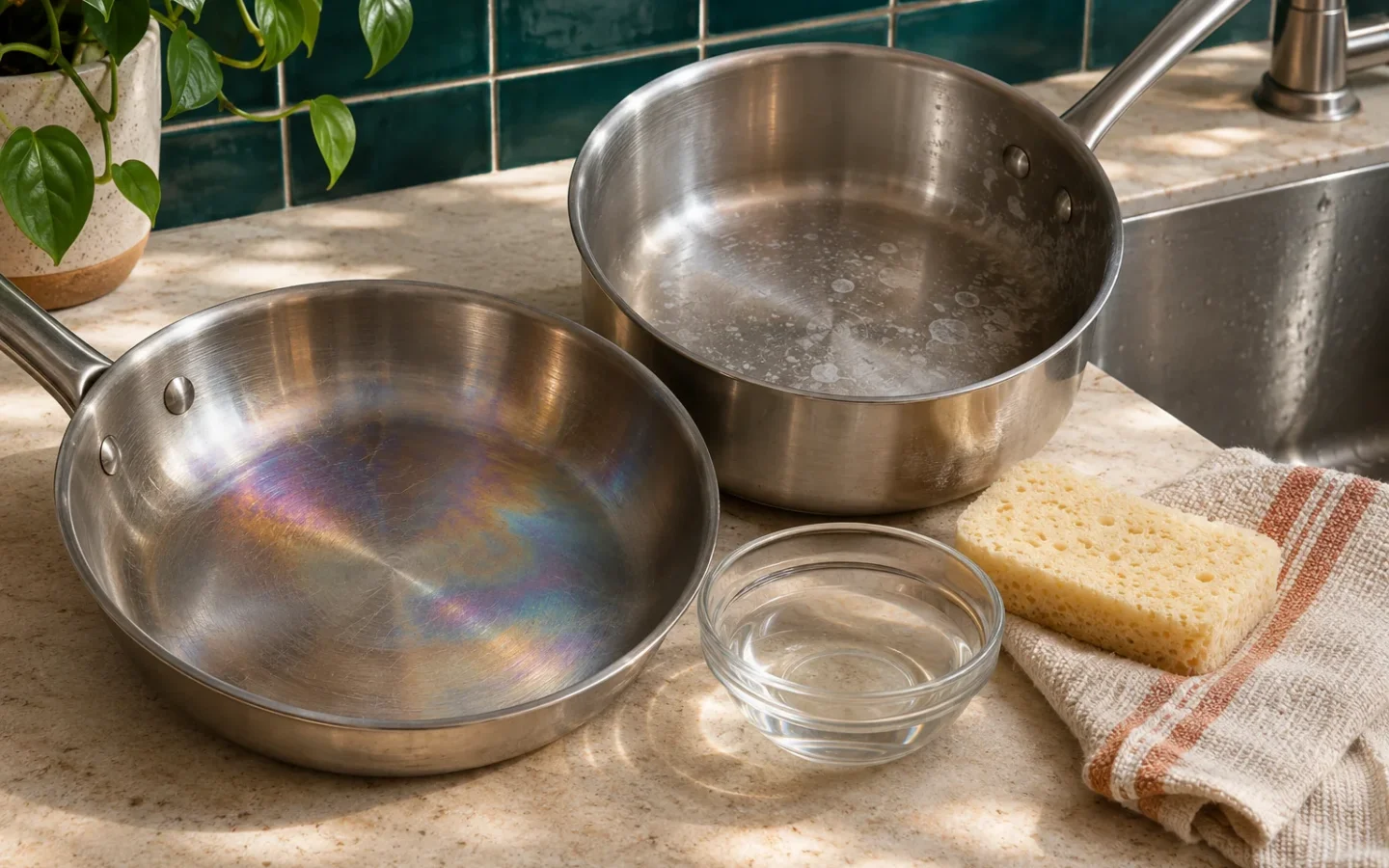
Rainbow bands and chalky white spots can appear on stainless cookware after one ordinary meal. They look dramatic against polished metal, but they are different deposits with different causes. Rainbow tint is usually an extremely thin oxide layer created by heat. White spots are commonly minerals left as water evaporates. Neither automatically means the pan is damaged, and attacking both with harsh abrasion can cause more harm than the marks.

Bar Keepers Friend Cleanser & Polish Powder, 12 Ounce
Certain content that appears on this site comes from Amazon. This content is provided “as is” and is subject to change or removal at any time.
Why we picked it
- Oxalic-acid formula targets oxidation and mineral discoloration
- Powder lets the user control water and contact time
- Useful on uncoated stainless after gentler cleaning fails
Reported drawbacks
- Not the first step for ordinary grease or loose scale
- Requires thorough rinsing instead of drying on the surface
- Wrong choice for coated, seasoned, or delicate finishes
Rainbow color is light interacting with a thin film
Stainless steel protects itself with a microscopic chromium-rich oxide layer. Heating can thicken that layer enough for light reflected from its top and bottom surfaces to interfere. Different film thicknesses reinforce different colors, producing blue, purple, gold, or rainbow patches. The same optical effect appears on soap bubbles, although the materials are different.
The color often forms where an empty area of the pan ran hotter than food-covered metal. It can appear after preheating, boiling a small quantity dry, or using a burner larger than the base. It is not loose dye, and it does not mean stainless has melted into the meal.
White spots are usually what water leaves behind
Tap water contains dissolved calcium, magnesium, and other minerals. When droplets dry, the water leaves and the minerals remain. A pot used for boiling can develop a pale ring at the waterline or scattered spots after air-drying. Harder water produces deposits faster.
Salt can create a different white mark. Undissolved crystals resting on a hot stainless floor create highly concentrated local chemistry and may contribute to tiny pits. Add salt after water is hot, stir until dissolved, and do not leave heavily salted liquid sitting in the pan after cooking.
Start with the mildest diagnosis
Wash away grease with warm water and dish soap first. Oil film can hold color and make mineral residue look darker. Dry the pan, then examine it under side light. Smooth color that changes with viewing angle suggests heat tint. A raised, chalky texture suggests mineral scale. Tiny craters that remain after cleaning are pitting and cannot be washed away.
Do not mix cleaning products. Acids, chlorine bleach, and commercial powders can react or damage nearby materials. Use one method, rinse thoroughly, and read the cookware maker’s care instructions before treating a coated, colored, or mixed-material exterior.
Dilute vinegar handles many mineral deposits
Cover the affected area with a mixture of one part plain white vinegar and three parts water. Let it sit briefly, then wipe with a non-scratch sponge and rinse. For a waterline inside a pot, warm the solution gently rather than boiling it aggressively. The acid helps dissolve alkaline mineral deposits.
Do not soak riveted joints, aluminum edges, or unknown coatings for hours. The goal is a short contact with the stainless interior, followed by a complete rinse and towel drying. If a light film remains, repeat once instead of reaching immediately for a harsh abrasive.
The same mild acid often removes heat tint
Vinegar can reduce a thin oxide tint as well. Wipe the cool pan with the diluted solution, rinse, and dry. A stainless-safe oxalic-acid cleanser can address stubborn discoloration, but use a small amount, follow its label, and rinse completely. It is a cleanser, not a seasoning layer that should remain.
A restored silver appearance does not improve cooking performance; it restores appearance. If the tint does not bother you and the surface is smooth, leaving it alone is reasonable. Repeated aggressive polishing removes material and changes the finish more than the original oxide did.
Scrub in the direction of the finish
Brushed stainless has visible grain. Work along it with a soft sponge or cloth. Circular scrubbing across the grain can leave a bright patch that looks worse than the stain. Polished interiors show scratches readily, so test any cleanser on a small area first.
Avoid steel wool unless the manufacturer explicitly recommends it. Ordinary steel fibers can lodge in stainless and later rust, creating orange specks that appear to come from the pan. Chlorine bleach can attack stainless and should not be used as a shortcut for discoloration.
Know when a mark is structural
Mineral scale sits on the surface; pitting removes metal. Dry the pan and run a fingernail lightly across a suspicious point. A crater, sharp edge, or cluster of pinholes that remains after descaling is physical damage. Small isolated pits may not change immediate use, but they cannot be polished back into intact metal.
Rust-colored marks may be transferred iron from utensils, sink racks, or steel wool. They can also appear where the stainless surface has been damaged. Clean gently and monitor. A growing crack, lifting base, deep corrosion near a handle, or sharp flaking surface deserves retirement or manufacturer inspection.
Prevention is mostly heat and drying control
- Preheat over moderate power and add cooking fat or food before the pan sits empty for long.
- Use a burner close to the base diameter so flames do not overheat the walls.
- Add salt to hot water, stir promptly, and empty leftovers rather than storing them in the pan.
- Rinse after boiling mineral-rich water and towel-dry instead of letting droplets evaporate.
- Use low-chloride dishwasher detergent if the maker permits machine washing, and remove the pan when the cycle ends.
In very hard-water areas, filtered water can reduce spotting in kettles and pans, but buying special water for ordinary cooking is rarely necessary. A quick towel dry prevents most visible residue at almost no cost.
Acidic food is not the same as an acid cleaning soak
Tomato, wine, and citrus are normal ingredients for intact stainless cookware. Their acidity can even loosen light mineral film during cooking. The concern is prolonged storage, particularly when salt is present or the surface is already pitted. Transfer leftovers to a storage container after the meal instead of using the pan as a refrigerator box.
A brief diluted-vinegar treatment is controlled: cool pan, known concentration, short contact, complete rinse. Leaving strong cleaner overnight around rivets, an exposed aluminum rim, or a decorative exterior is not equivalent. More time is not automatically more cleaning; it may simply expose additional materials.
Use heat tint as feedback
A recurring blue ring in the same place can map where the pan runs hottest. Compare it with the burner diameter and your preheating routine. If the tint appears outside the food footprint, use lower power, center the vessel, and add ingredients sooner. On gas, reduce flames that climb the wall.
The goal is not to prevent every color. Stainless may tint during ordinary searing even with sound technique. The useful distinction is between a harmless occasional film and a pattern that accompanies smoking oil, warped bases, or food burning in one zone. Clean the tint if you prefer, but correct the heat pattern if cooking is also uneven.
What a dishwasher changes
Machine washing combines alkaline detergent, long wet contact, high-temperature drying, and minerals in rinse water. That can leave a uniform haze even when the pan is labeled dishwasher safe. It may also discolor exposed aluminum at a clad edge. “Safe” can mean structurally usable, not visually unchanged.
If appearance matters, hand-wash and towel-dry. If convenience matters more, follow the maker’s machine instructions, avoid crowding dissimilar metals together, and inspect the rim periodically. Choose the routine deliberately instead of treating cosmetic change as an unexpected failure.
Keep powdered cleanser dry between uses and never sprinkle it into a hot pan, where dust and steam can rise toward your face. Cleaning begins only after the cookware has cooled to a safe handling temperature.
A finish is allowed to show use
Cookware is not a mirror that happens to heat food. Fine scratches, slight tint, and a softened polish are normal records of use. Care should preserve a smooth, clean, structurally sound surface—not return every pan to its showroom reflection after dinner. Pans that show this kind of wear are earning their place, which is a good argument for buying fewer, better-used pieces.
Identify the mark before cleaning it: soap for grease, brief mild acid for minerals or heat tint, and restraint when the issue is cosmetic. That approach protects the stainless surface and avoids turning a harmless color into permanent abrasion.