As an Amazon Associate I earn from qualifying purchases. Cookware Compass is reader-supported: if you buy through a link on this page we may earn a commission, at no extra cost to you. Read our disclosure.
A saucepan is the pot you reach for most often without thinking about it: rice, oatmeal, sauces, boiled eggs, reheated soup. Because it gets so much use, a good one makes daily cooking noticeably easier, and a poor one scorches sauces and spills when you pour. Here is what to look for.
What a saucepan is for
A saucepan has tall, straight sides, a single long handle, and usually a lid. The tall sides limit evaporation and keep liquids from splashing, which makes it ideal for:
- Cooking rice, quinoa, and other grains
- Simmering sauces, gravies, and custards
- Boiling eggs and small batches of vegetables
- Reheating soups and leftovers
- Melting butter or chocolate (in a small saucepan)
Which size?
| Capacity | Best for |
|---|---|
| 1 to 1.5 quarts | Melting butter, warming milk, a single portion of oatmeal |
| 2 quarts | Sauces, rice for two, boiled eggs |
| 3 quarts | The most versatile size: rice for a family, soups, larger sauces |
| 4 quarts and up | Big batches. At this size, many cooks reach for a Dutch oven or stockpot instead. |
If you only buy one, a 3-quart saucepan with a lid covers the widest range of everyday jobs.
Material: why clad stainless is the usual pick
Saucepans are used for delicate tasks like simmering dairy and thick sauces, which scorch easily if heat collects in one spot. That makes even heating especially important.
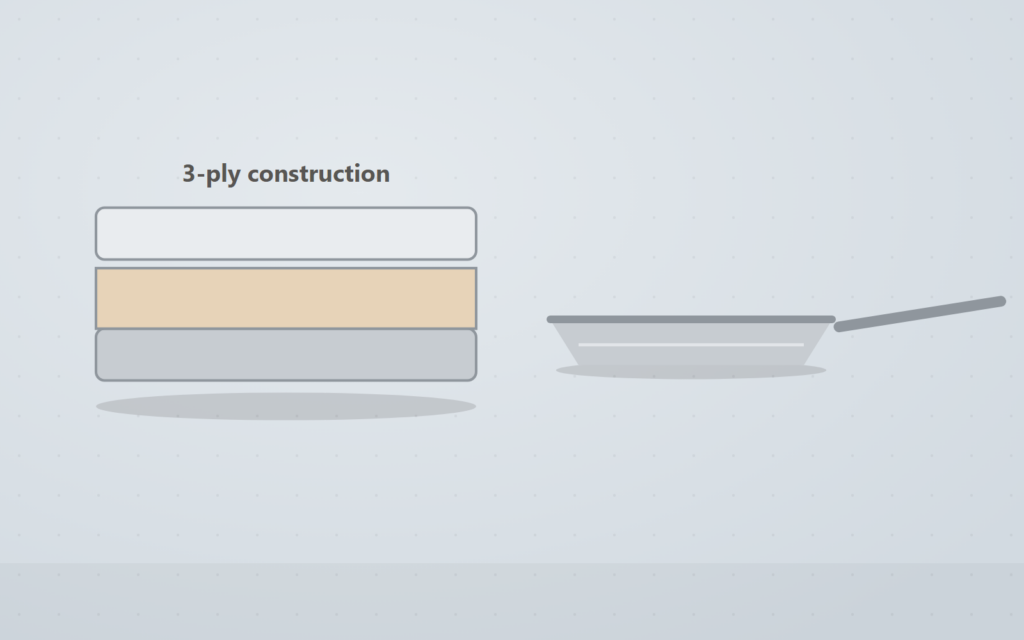
- Fully clad stainless steel has an aluminum or copper core running through the base and up the sides, so heat spreads evenly and the walls warm too. It is non-reactive, so tomato and wine sauces are no problem, and it lasts for decades. Learn more in tri-ply vs fully clad stainless steel.
- Disc-bottom stainless heats well on the base but less up the sides. Fine for boiling, less ideal for thick sauces.
- Nonstick saucepans are easy to clean after oatmeal or rice, but the coating wears out and they can’t take high heat.
- Enameled cast iron saucepans are excellent for slow simmering, but they are heavy for a pot you lift and pour often.
Details that make a difference
- A tight-fitting lid keeps steam in, which matters for rice and grains.
- A drip-free or flared rim lets you pour sauces and soups without dribbling down the side.
- A stay-cool, riveted handle that feels secure when the pot is full.
- Induction compatibility if you have, or may buy, an induction cooktop.
- Oven-safe construction, useful for finishing dishes or keeping food warm.
A 3-quart example
The Cuisinart MultiClad Pro 3-quart saucepan is one example of a clad stainless saucepan in the most useful size. According to the manufacturer, its triple-ply construction has a pure aluminum core that spreads heat along the bottom and the sidewalls, and it has a drip-free pouring rim, a tight-fitting cover, and a riveted stay-cool handle.
Versatile 3-quart size
Cuisinart MultiClad Pro Triple Ply Stainless 3-Quart Saucepan with Cover
A good everyday saucepan for rice, sauces, and soups if you want one pot that does most small jobs well.
- Triple-ply with an aluminum core for even heating
- Heat spreads along the base and up the sides
- Drip-free pouring rim and tight-fitting cover
- Riveted stainless handle designed to stay cool
- Dishwasher-safe
- Stainless needs a little fat to keep starchy foods from sticking
- Shows water spots unless dried promptly
Caring for a stainless saucepan
Soak it right after cooking rice or oatmeal so starch doesn’t harden. For white mineral spots or rainbow heat tint, a little white vinegar does the trick. Our guide on how to clean stainless steel pans has more tips.
Quick answers
Saucepan or saucier? A saucier has rounded sides where the base meets the walls, which makes whisking easier and keeps sauces from catching in the corners. A standard saucepan is more common and works for most jobs.
Do I need a lid? Yes, for rice and grains especially. A lid also brings water to a boil faster.
Is nonstick better for rice? It makes cleanup easier, but a stainless pan with a short soak cleans up fine and lasts much longer.
Bottom line
For most kitchens, a 3-quart fully clad stainless steel saucepan with a tight lid and a comfortable handle is the most useful pot you can own. Add a smaller 1.5- or 2-quart pan later if you often make sauces or single portions.