As an Amazon Associate I earn from qualifying purchases. Cookware Compass is reader-supported: if you buy through a link on this page we may earn a commission, at no extra cost to you. Read our disclosure.
Found an old cast iron skillet covered in orange rust? Don’t throw it out. Unless the pan is cracked or badly pitted, rust on cast iron is a surface problem that can be scrubbed away. With an hour of work and a few rounds of seasoning, the pan will be ready to cook again.
First, check that the pan is worth saving
- Cracks: hold the pan up to the light and look closely. A cracked pan should be retired.
- Warping: set it on a flat counter. A slight wobble is usually fine on gas, but a badly warped pan won’t sit well on glass or induction.
- Deep pitting: heavy rust can eat small pits into the surface. Light pitting is cosmetic. Severe pitting makes the pan hard to keep seasoned.
What you need
- Steel wool or a stiff scrub brush
- Dish soap
- Optional: white vinegar
- Paper towels or a lint-free cloth
- Neutral cooking oil or shortening
- Gloves, if you prefer
Step 1: Scrub off the rust
Wash the pan with warm, soapy water, then scrub the rusty areas with steel wool until you see bare, dark gray iron. For light rust, this is all it takes.
Step 2 (optional): A short vinegar soak for heavy rust
For thick rust, soak the pan in equal parts white vinegar and water. Check it often. Vinegar dissolves rust, but it also starts to attack the iron itself if the pan is left too long. Thirty minutes to an hour is usually enough, and you should stop as soon as the rust scrubs off easily. Do not leave it overnight.
After soaking, scrub again, then wash thoroughly with soap and water to remove all the vinegar.
Step 3: Dry it immediately and completely
Bare iron can start to flash-rust within minutes. Towel it off, then set it on a burner over low heat for a few minutes until every bit of moisture has evaporated.
Step 4: Season it
While the pan is still warm, rub a very thin layer of oil over every surface, inside and out, including the handle. Wipe away as much as you can, since too much oil turns sticky. Bake it upside down at 450 to 500°F (230 to 260°C) for one hour, then let it cool in the oven.
A stripped pan needs a solid base, so repeat this three or four times. Our guide on how to season a cast iron skillet covers the method in detail.
Step 5: Cook with it
The best way to build durable seasoning is to cook with oil: sautéing, shallow frying, roasting vegetables. Save acidic dishes like tomato sauce for later, once the seasoning is well established.
A better tool for everyday cleaning
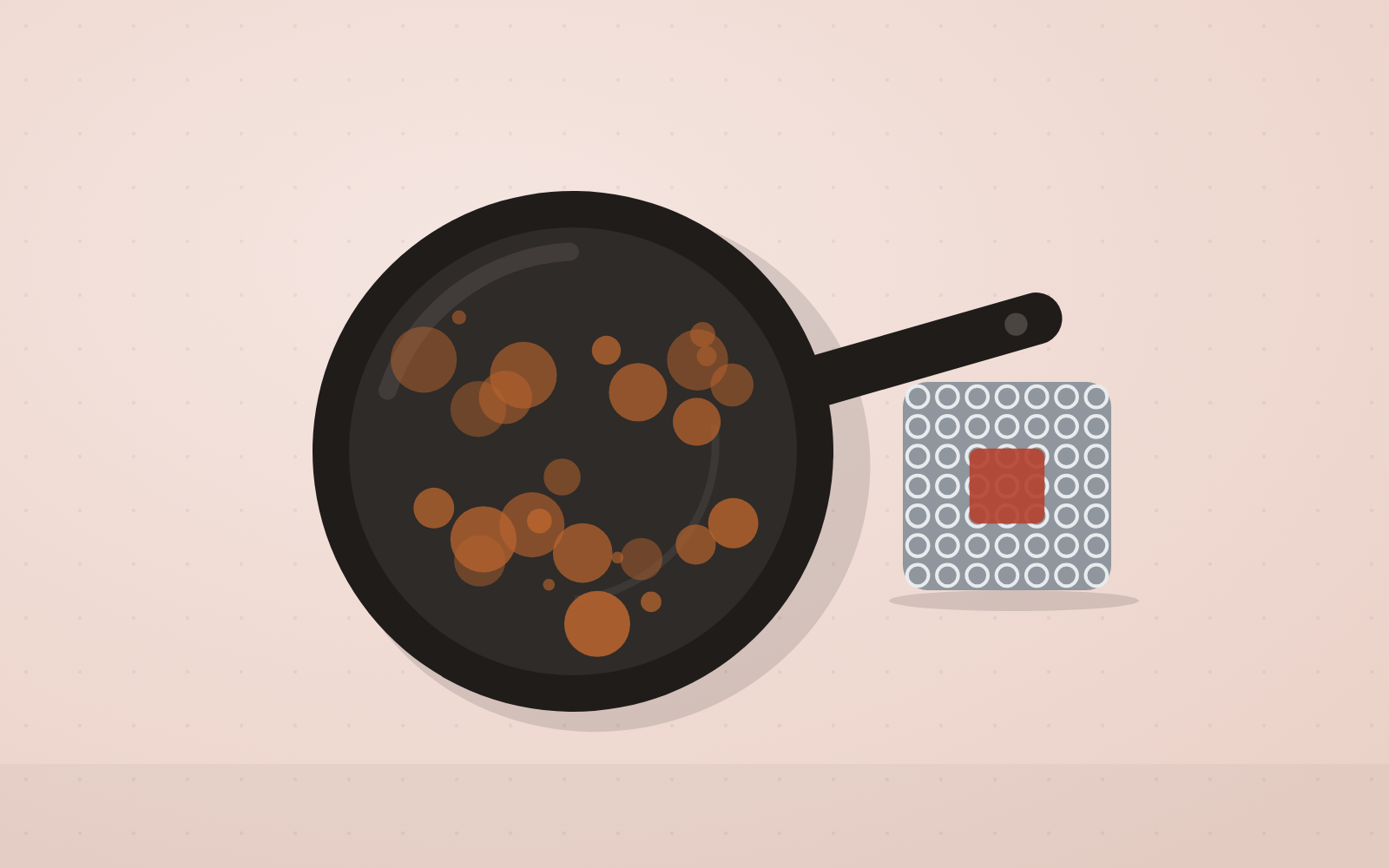
Steel wool is right for stripping rust, but it is too aggressive for daily cleaning, because it removes the seasoning you just built. For everyday scrubbing, many cast iron owners use a chainmail scrubber. It shifts stuck-on food without needing harsh soap and is gentler on seasoning than steel wool.
The Lodge Chainmail Scrubbing Pad is one example. According to the manufacturer, it combines stainless steel chainmail with a silicone core for grip, and it is dishwasher-safe.
Everyday cast iron cleaning
Lodge Chainmail Scrubbing Pad, Stainless Steel
A handy companion once your pan is restored, for keeping it clean without stripping the new seasoning.
- Stainless steel chainmail lifts stuck-on food
- Silicone core makes it easier to grip
- Dishwasher-safe and reusable
- Compact and easy to store
- Not meant for nonstick or enameled surfaces
- Won't remove heavy rust on its own (use steel wool for that)
How to keep it from rusting again
- Dry the pan right after washing, ideally on a warm burner.
- Wipe in a few drops of oil after each cleaning.
- Never soak it in the sink or put it in the dishwasher.
- Store it in a dry place. If you stack pans, put a paper towel between them to absorb moisture.
Quick answers
Is a little rust dangerous? A small amount of surface rust isn’t something to panic about, but scrub it off and re-season before cooking for the best results.
Can I use soap on cast iron? Yes. A little mild dish soap won’t harm well-polymerized seasoning.
Bottom line
Scrub to bare metal, use vinegar only briefly for heavy rust, dry it completely, and season in thin layers. A rusty cast iron pan can almost always be brought back.