As an Amazon Associate I earn from qualifying purchases. Cookware Compass is reader-supported: if you buy through a link on this page we may earn a commission, at no extra cost to you. Read our disclosure.
Skillet size sounds like a minor detail until you try to brown four chicken thighs in a pan that only fits two. Too small and food steams instead of searing. Too large and the pan is heavy, slow to heat, and wasteful for a single egg. Here is how to choose the right size for the way you cook.
How skillets are measured
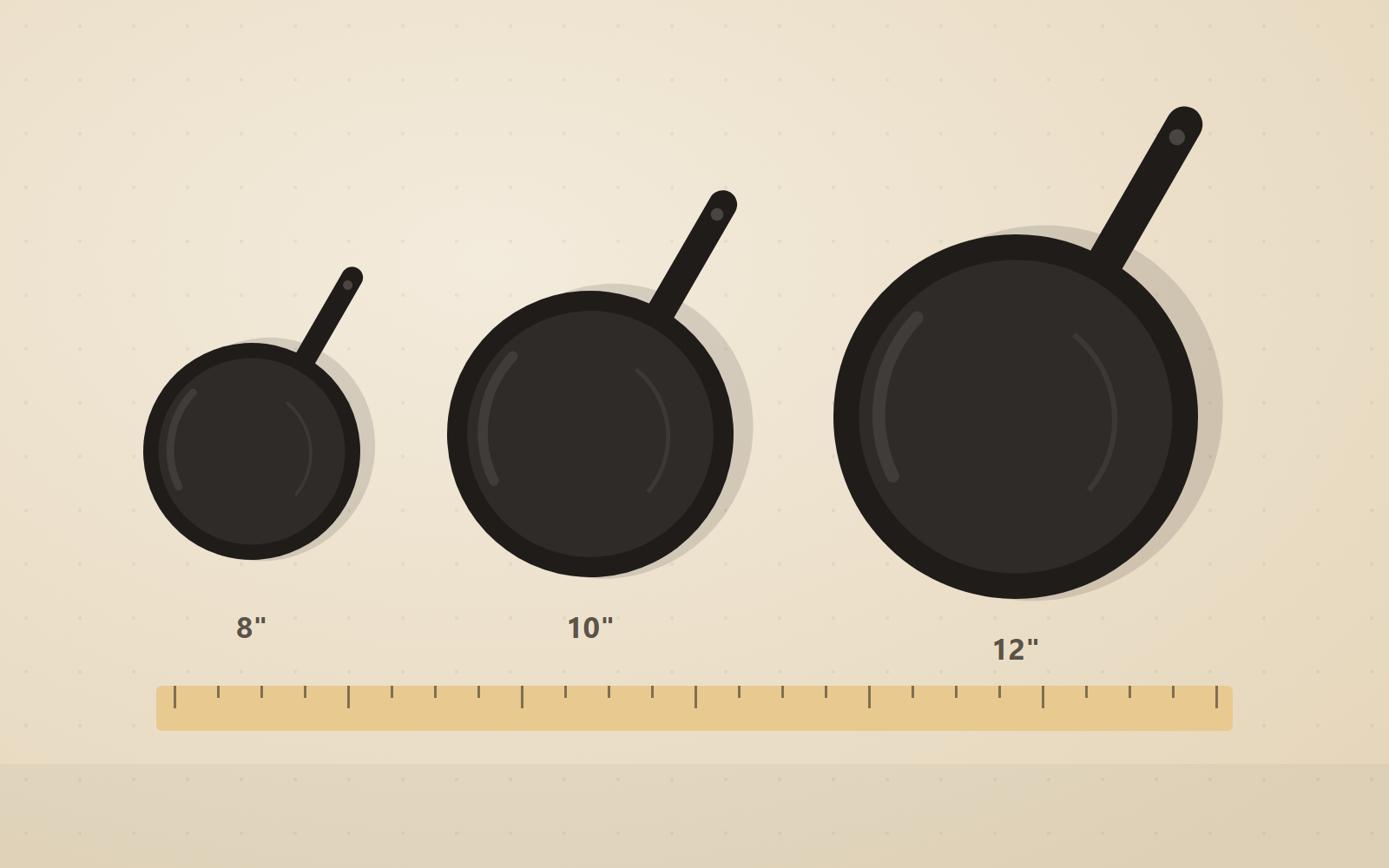
Manufacturers measure skillets across the top, from rim to rim. Because the sides flare outward, the flat cooking surface is smaller than the number on the label. On a typical skillet, the flat base is roughly 2 inches narrower than the stated size, so a “12-inch” pan has a cooking surface closer to 10 inches.
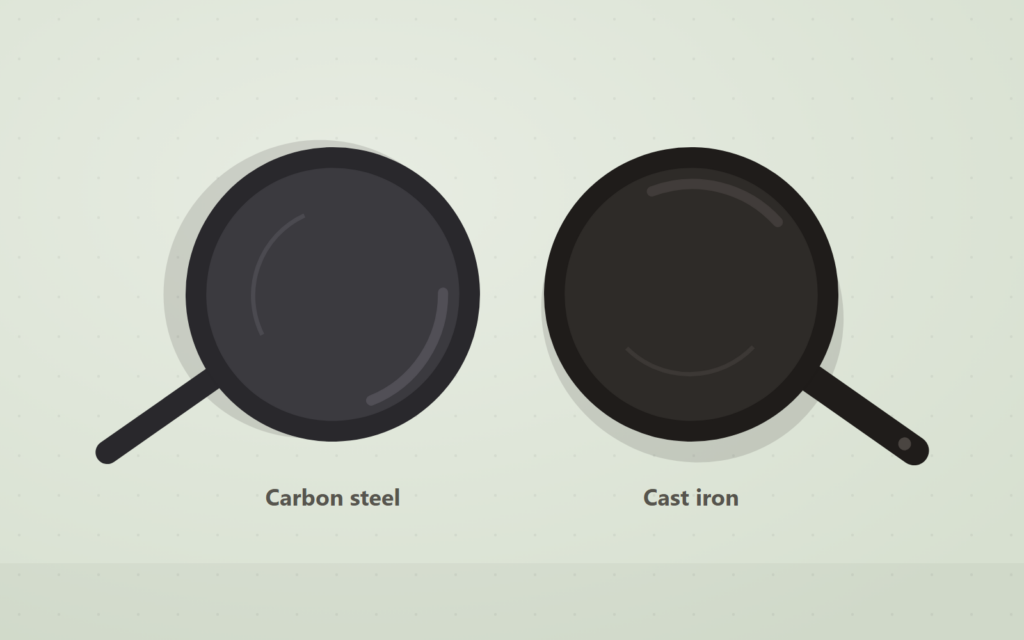
When comparing pans, look for the cooking surface or base diameter in the manufacturer’s specifications. Two pans sold as the same size can differ noticeably, depending on how steep their sides are. Carbon steel pans, for example, often have especially sloped sides and a smaller flat area than you might expect.
Quick guide by size
| Size (rim) | Good for | Typical uses |
|---|---|---|
| 8 inches | 1 person | One or two eggs, toasting nuts and spices, a single small omelet |
| 10 inches | 1 to 2 people | Two chicken breasts, a frittata for two, everyday sautéing |
| 12 inches | 3 to 4 people | Searing meat without crowding, family stir-fries, pan sauces, skillet dinners |
| 14 inches and up | Large batches | Big families and entertaining. Often too large for a standard burner to heat evenly. |
Why crowding matters
When food is packed tightly in a pan, moisture can’t escape fast enough. The pan’s temperature drops, and the food steams in its own juices instead of browning. If you cook for more than two people, a 12-inch skillet usually gives you better results than a 10-inch one, even for the same recipe.
A good rule: leave a finger’s width of space between pieces of meat or vegetables. If you can’t, cook in batches or use a larger pan.
Consider your burner and your wrist
- Burner size: a pan much wider than the burner will have a hot center and cooler edges. Most home burners suit 10- and 12-inch pans well.
- Weight: a 12-inch cast iron skillet is heavy, often 7 to 8 pounds empty. If lifting that is uncomfortable, a 12-inch stainless or carbon steel pan is lighter, or look for a cast iron pan with a helper handle on the opposite side.
- Storage and oven: check that a large skillet fits in your cabinet, your sink, and your oven.
Does material change the right size?
A little. Cast iron holds heat so well that a 12-inch pan keeps searing even when a lot of cold food goes in, which makes it a forgiving family-size choice. Stainless steel heats more evenly to the edges, so the whole cooking surface is usable. Nonstick pans are mainly for eggs and delicate foods, so a smaller 8- or 10-inch size is usually all you need there.
A classic 12-inch example
If you decide a 12-inch cast iron skillet suits your cooking, the Lodge 12-inch is a widely available, straightforward example of the type. It arrives pre-seasoned, goes from stovetop to oven, and is made in the USA, according to the manufacturer.
Family-size cast iron
Lodge Pre-Seasoned Cast Iron Skillet, 12 Inches
A good fit if you cook for three or four people and want one pan for searing, roasting, and baking.
- Arrives pre-seasoned and ready to use
- Oven-safe and stovetop compatible
- Holds heat well for searing
- Made in the USA
- Heavy, like any 12-inch cast iron pan
- Handle gets hot, so keep a mitt nearby
- Needs to be dried and oiled after washing
Care is simple: clean it while warm, dry it right away, and wipe in a thin layer of oil. Our guide on how to season a cast iron skillet covers the details.
Which size to buy first
For most households, start with a 10- or 12-inch skillet. Choose 10 inches if you usually cook for one or two people and want a lighter pan. Choose 12 inches if you cook for a family, sear meat often, or like one-pan dinners.
A small 8-inch nonstick pan makes a useful second pan for eggs. Not sure about material? See cast iron vs stainless steel vs nonstick.
Bottom line
Read the cooking surface, not just the rim size. Match the pan to how many people you cook for, and size up rather than down if you like a good sear.