As an Amazon Associate I earn from qualifying purchases. Cookware Compass is reader-supported: if you buy through a link on this page we may earn a commission, at no extra cost to you. Read our disclosure.
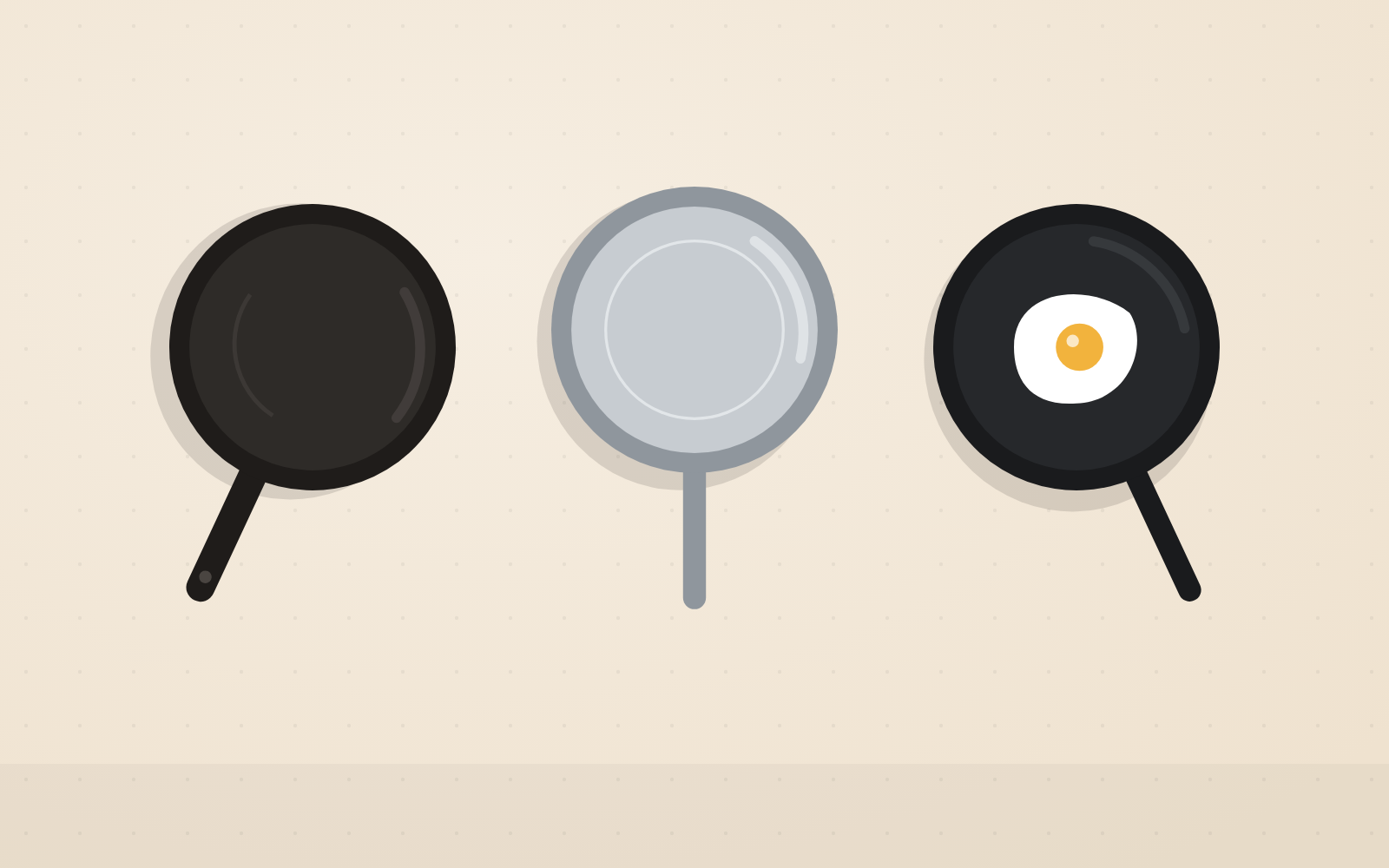
If you are buying your first good pan, or replacing a tired one, the choice usually comes down to three materials: cast iron, stainless steel, and nonstick. Each one is excellent at some jobs and frustrating at others. This guide explains the trade-offs so you can pick the one that fits how you cook.
The short answer
- Choose nonstick if you mostly cook eggs, pancakes, and delicate fish, and you want the easiest cleanup.
- Choose stainless steel if you want one pan that does almost everything, goes in the oven, and lasts decades.
- Choose cast iron if you love searing, roasting, and cornbread, and you do not mind a heavier pan that needs a little care.
Most home cooks end up owning two of the three. A common pairing is a stainless skillet for everyday cooking plus a small nonstick pan for eggs.
Cast iron
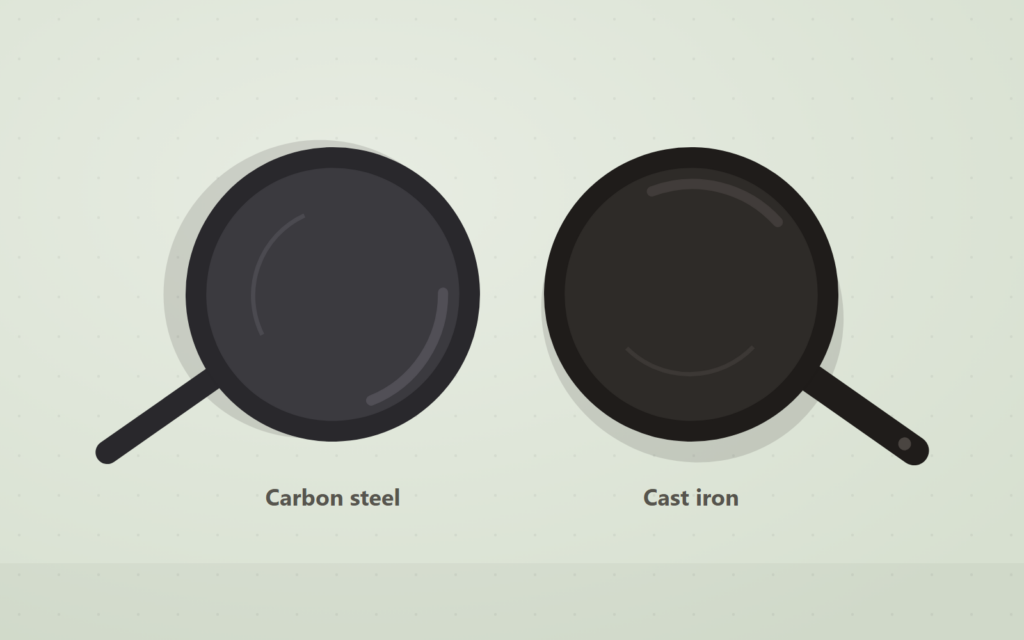
Cast iron heats slowly and unevenly at first, but once it is hot it holds that heat very well. That makes it ideal for searing steaks, browning chicken thighs, and baking in the oven. A well-seasoned pan becomes naturally slick over time.
Good at: high-heat searing, oven roasting, shallow frying, baking.
Not great at: quick temperature changes, long simmering of acidic sauces (tomato, wine, vinegar) before the seasoning is well established.
Care: dry immediately and wipe with a thin coat of oil. It can rust if left wet. See our guide on how to season a cast iron skillet.
Weight: heavy. A 12-inch skillet often weighs 7 to 8 pounds.
Induction: yes.
Stainless steel
Good stainless cookware is not solid steel. It is a sandwich of stainless steel around an aluminum or copper core that spreads heat evenly. Stainless does not react with acidic foods, has no coating to wear out, and can handle very high heat and the oven.
Good at: searing, sautéing, pan sauces, simmering anything, oven finishing.
Not great at: eggs and delicate fish unless you preheat properly and use enough fat.
Care: dishwasher-safe in most cases, but hand washing keeps it looking better. Stuck-on food comes off with a soak or a gentle cleanser. See how to clean stainless steel pans.
Induction: usually yes, but check the label. It depends on the outer layer.
The construction matters more than the brand. Learn what to look for in tri-ply vs fully clad stainless steel.
Nonstick
Nonstick pans have a coating, either PTFE (the material often known by the brand name Teflon) or a ceramic sol-gel, that food releases from with very little oil. They are the easiest pans to cook delicate foods in and to clean.
Good at: eggs, omelets, pancakes, crepes, delicate fish, reheating.
Not great at: high-heat searing, metal utensils, the dishwasher.
Lifespan: the coating wears out. With careful use, expect a few years, not decades.
Induction: only if the pan has a magnetic steel base.
Wondering about safety? Read is nonstick cookware safe?
Side-by-side comparison
| Cast iron | Stainless steel | Nonstick | |
|---|---|---|---|
| Heat retention | Excellent | Good | Fair |
| Searing | Excellent | Excellent | Poor |
| Eggs and fish | Good once seasoned | Needs technique | Excellent |
| Acidic foods | Limited | Excellent | Good |
| Oven use | Yes | Yes | Check the label |
| Maintenance | Moderate | Low | Low, but gentle |
| Lifespan | Generations | Decades | A few years |
Which size should you buy?
For a first pan, a 10-inch or 12-inch skillet is the most useful size. A 10-inch pan is easier to handle and fits two to three chicken breasts. A 12-inch pan gives food room to brown instead of steam, which matters when cooking for a family.
Bottom line
There is no single best pan, only the best pan for what you cook most often. Start with the material that matches your everyday meals, then add a second pan to cover the gaps.