As an Amazon Associate I earn from qualifying purchases. Cookware Compass is reader-supported: if you buy through a link on this page we may earn a commission, at no extra cost to you. Read our disclosure.
Stainless steel pans are almost impossible to ruin, but they do pick up burnt-on food, rainbow stains, and cloudy white spots. The good news: nearly all of it comes off with simple tools and a little patience. Here is how to handle each problem without scratching or damaging the pan.
Everyday cleaning
- Let the pan cool a little. Pouring cold water into a very hot pan can warp it.
- Deglaze while it is warm. Add a splash of hot water and scrape with a wooden spatula. Most stuck bits release immediately.
- Wash with hot, soapy water and a non-scratch sponge.
- Dry right away with a towel to prevent water spots.
Burnt-on or stuck food
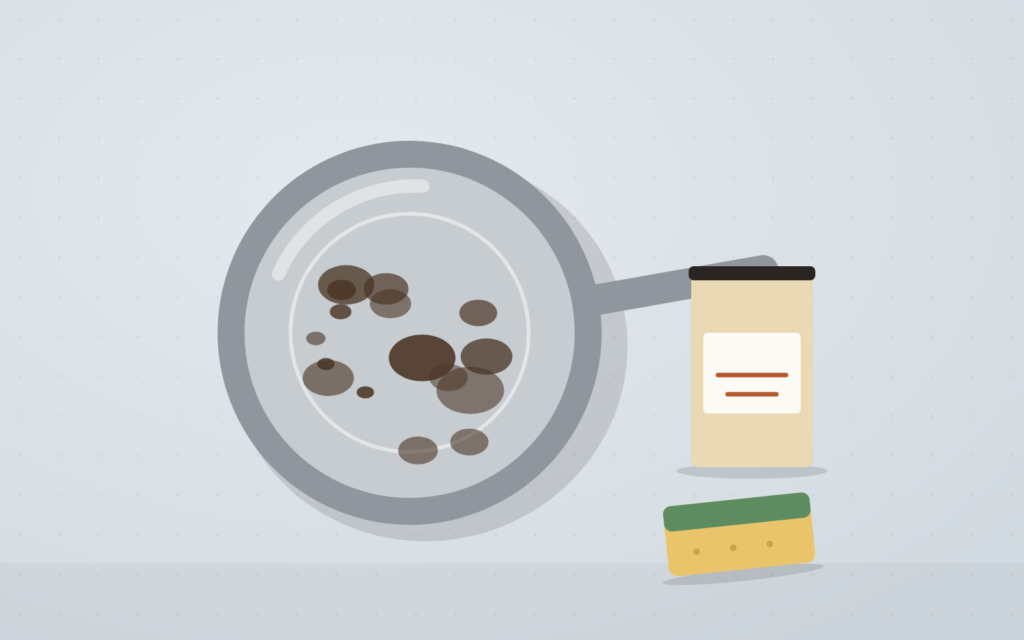
Fill the pan with enough water to cover the burnt area, add a tablespoon or two of baking soda, and bring it to a simmer for 10 to 15 minutes. Let it cool slightly, then scrape with a wooden spatula and wash. Repeat if needed.
For stubborn residue, use a powdered cleanser made for stainless steel, such as one based on oxalic acid. Make a paste with a little water, scrub gently in the direction of the metal’s grain, and rinse thoroughly.
Rainbow or bluish discoloration
This rainbow tint is caused by heat. It is harmless and does not affect cooking. To remove it, wipe the pan with white vinegar, or a stainless steel cleanser, then rinse and dry.
White, chalky spots
These are usually mineral deposits from hard water, or from boiling salty water. Simmer a mixture of one part white vinegar to three parts water in the pan for a few minutes, let it cool, then wash and dry.
Small pits or dots
Tiny pits can form when salt is added to cold water and left to sit on the bottom of the pan. Prevent this by adding salt only after the water is boiling and stirring to dissolve it.
What to avoid
- Chlorine bleach: it can stain and corrode stainless steel.
- Steel wool on polished exteriors: it can leave scratches. Save it for the toughest jobs, and scrub with the grain.
- Thermal shock: do not plunge a hot pan into cold water.
- Leaving it wet: air-drying leaves water spots.
How to stop food from sticking in the first place
Most sticking in stainless steel comes from adding food to a pan that is not hot enough.
- Preheat the empty pan over medium heat for two to three minutes.
- Test it: flick in a few drops of water. If they skitter around as small beads instead of sizzling and evaporating, the pan is ready.
- Add oil, let it heat for a few seconds, then add the food.
- Do not move food too soon. Proteins like chicken and fish release naturally once they have browned.
Is the dishwasher okay?
Most fully stainless pans are dishwasher-safe, but frequent dishwasher cycles can dull the finish over time. Check the manufacturer’s care instructions, and hand wash if you want the pan to keep its shine.
Bottom line
Deglaze while warm, simmer baking soda water for burnt-on food, use vinegar for stains and spots, and dry every time. With that routine, a stainless steel pan can look good for decades.